Key takeaways:
- A successful Christmas turkey starts at the butcher, ideally with a bird raised in Quebec, and with thawing planned several days ahead.
- The Government of Quebec recommends an internal temperature of 82 °C for a whole turkey and 74 °C for the breast.
- Cooked separately, the stuffing turns out crispier and safer.
- A great gravy starts with well-deglazed pan juices, reduced, then finished with butter.
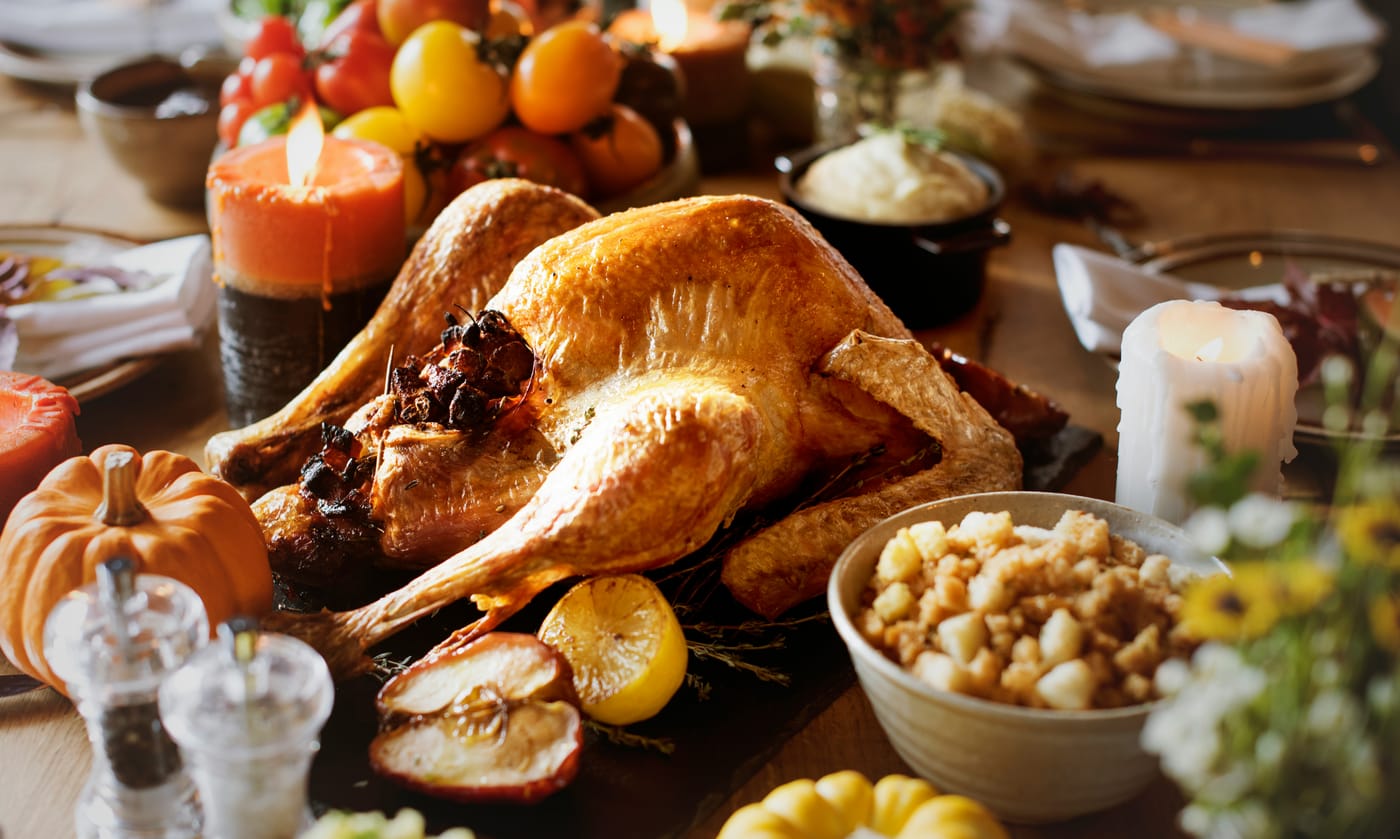
Every year, it takes pride of place in the middle of the table, and every year, the same small worry comes with it. Will the Christmas turkey be juicy or dry? Will the stuffing be cooked through? Will the gravy have enough flavour?
These doubts are hardly surprising. A five- or six-kilo bird is something most of us cook only once or twice a year. And since the breast cooks faster than the legs, one often ends up too dry or the other undercooked.
Here are the techniques chefs use in professional kitchens, from choosing the turkey to filling the gravy boat, with the times and temperatures recommended by public health authorities.
Choosing your Christmas turkey
It all starts at the store. A fine bird forgives many mistakes, while a mediocre turkey will disappoint even with the best technique.
Fresh or frozen?
A fresh turkey has more tender meat and spares you the thawing. It usually has to be ordered ahead from your local butcher. A frozen turkey remains a practical option, as long as you give it time to thaw properly.
Choosing a bird raised in Quebec also means supporting local farms and shortening the path from farm to plate, a philosophy at the heart of Quebec seasonal cuisine.
What size for how many guests?
In the kitchen, the usual rule is about 500 g of whole turkey, bones included, per guest. That is enough for generous portions, with a few leftovers for next-day sandwiches.
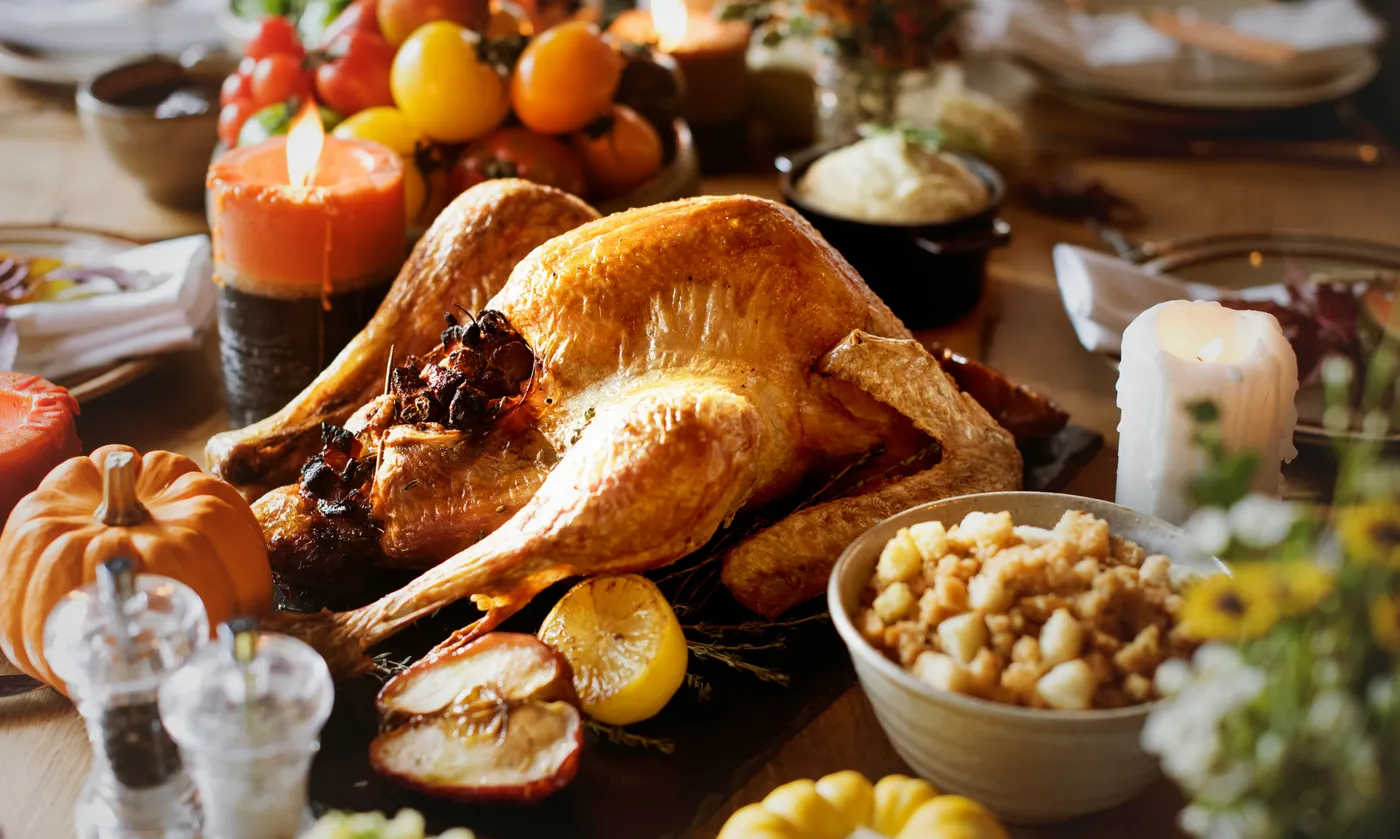
The gastronome Jean Anthelme Brillat-Savarin already devoted a whole passage to this bird in his Physiologie du goût:
“The turkey is certainly one of the finest gifts the New World has made to the Old.” (free translation)
Thawing and preparing the turkey safely
This is the most underestimated step. According to the Government of Quebec, you need about 24 hours in the refrigerator for a 3 kg turkey, then one more day for every additional 2 kg.
Short on time? Thawing in cold water is still possible. Keep the turkey in a sealed bag, change the water every 30 minutes and allow at least one hour per kilo.
Dry brining, the chefs’ secret
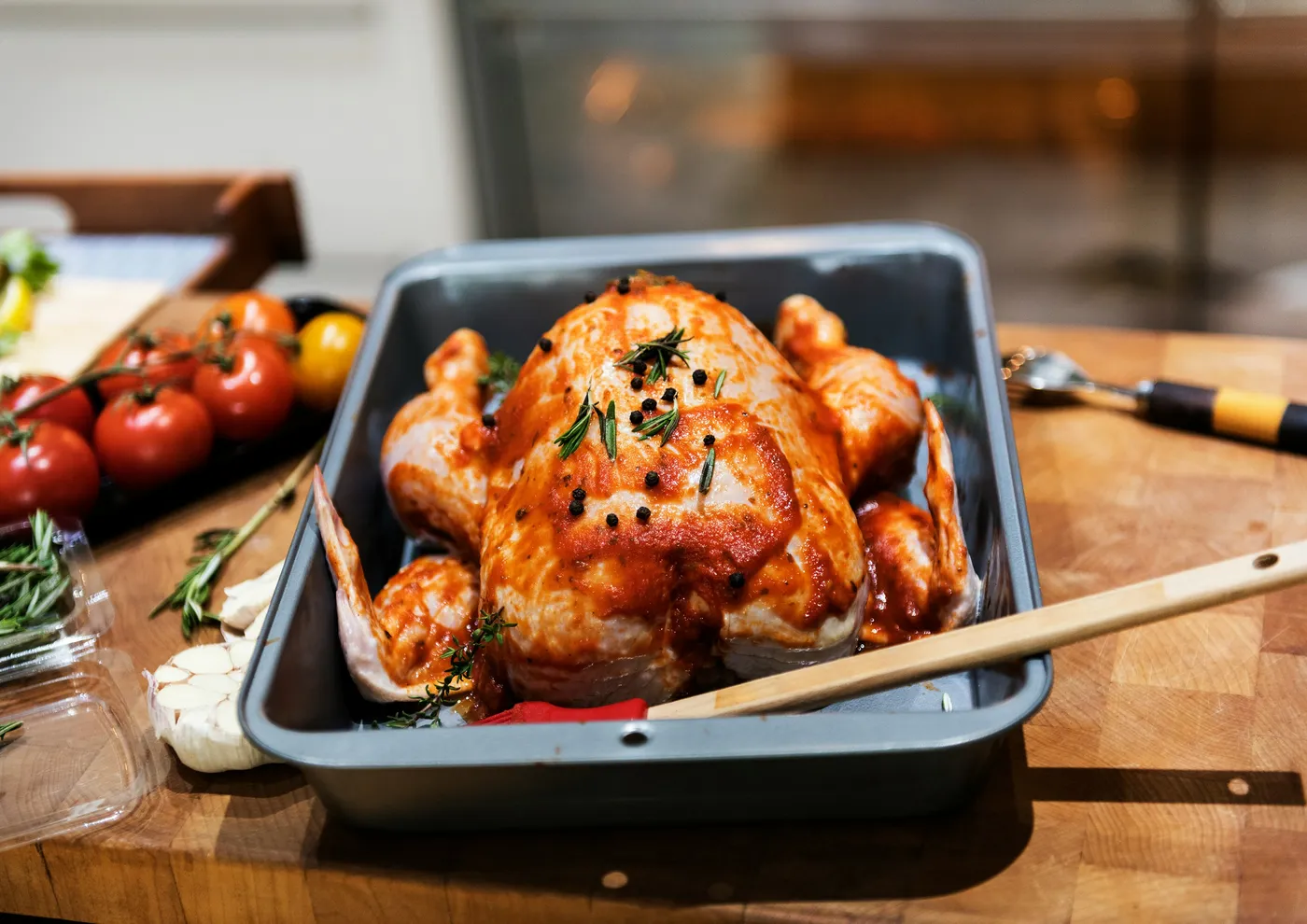
The day before, many chefs dry brine their turkey with about 10 g of salt per kilo, then leave it uncovered in the refrigerator. The salt penetrates the meat, which holds on to its juices better, while the skin dries slightly and turns crispier in the oven.
Butter under the skin
Just before roasting, gently slide soft butter flavoured with sage, thyme and orange zest under the skin of the breast. It bastes the most delicate part of the bird throughout the cooking.
Would you rather have a chef take care of the turkey, the sides and the service on Christmas Eve? Simply request a quote for your holiday dinner.
Stuffing, the chef’s way
The stuffing is often the quiet star of the meal. The Government of Quebec advises against stuffing the turkey the day before, since it encourages bacteria to multiply. Chefs go one step further. They cook it separately.
Why cook it separately
In a buttered dish, the stuffing develops a golden crust while staying moist inside. It also reaches the 74 °C recommended by Health Canada more easily, without lengthening the turkey’s cooking time.
Ingredients for a local stuffing
A good stuffing balances fat, acidity and crunch. Here is a base that does justice to local products.
- Stale sourdough bread, cut into cubes and lightly toasted
- Quebec pork sausage meat
- Sautéed mushrooms, ideally grown close to home
- Quebec apples and dried cranberries for a tangy note
- Softened onions, sage, thyme and a good homemade chicken stock
Roasting, times and temperatures
The Government of Quebec recommends roasting the turkey at 165 °C or higher and estimates the time at about 45 minutes per kilo of thawed raw turkey. Still, only the thermometer has the final say.
| Turkey weight | Thawing in the refrigerator | Estimated roasting at 165 °C | Number of guests |
|---|---|---|---|
| 3 kg | About 1 day | About 2 h 15 | 6 |
| 5 kg | About 2 days | About 3 h 45 | 10 |
| 7 kg | About 3 days | About 5 h 15 | 14 |
| 9 kg | About 4 days | About 6 h 45 | 18 |
The internal temperature must reach 82 °C for a whole turkey, and 74 °C for a breast. Insert the thermometer into the thickest part, without touching the bone.
Carving before roasting
To avoid a dry breast, some chefs separate the legs from the breast before roasting. Each piece then cooks at its own pace and comes out of the oven at the right time. You lose a little of the show, but you gain a lot in tenderness.
Resting, the forgotten step
Once out of the oven, let the turkey rest for 30 to 45 minutes under a loosely tented sheet of aluminum foil. The juices redistribute through the meat and carving is much cleaner. Bonus: the oven is free for the sides.
A gravy worthy of a fine table
The gravy ties together everything on the plate. It deserves as much care as the turkey itself.
A rich French-style jus
Skim the fat from the roasting pan, then deglaze it with a splash of white wine, scraping up the browned bits. Add chicken stock, reduce by half, then strain. Off the heat, a few knobs of cold butter give a glossy gravy that coats the spoon.
This method, a cousin of the one used for this Lac Brome duck breast recipe, works for all roast poultry.
A Quebec touch
A handful of cranberries, a spoonful of maple syrup or a splash of ice cider adds a fruity note that balances the richness of the meat. For the wine, this guide to food and wine pairing at home will help you choose between a supple red and a full-bodied white.
Leftovers, safely
Refrigerate leftovers as soon as possible, deboned and divided into small containers. The Government of Quebec recommends eating them within three or four days, or freezing them.
A successful Christmas turkey without the headache
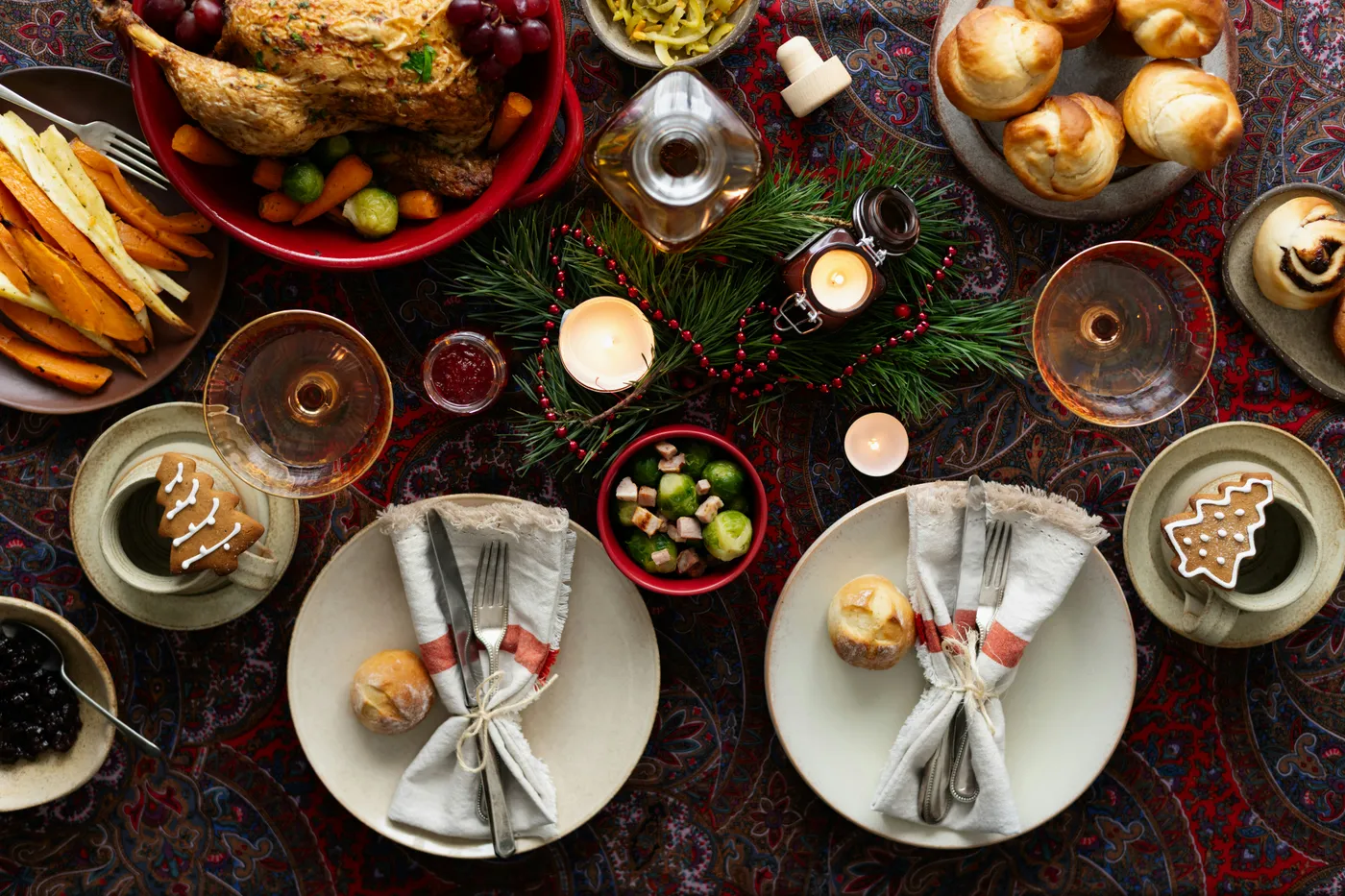
A successful Christmas turkey is largely decided before you even turn on the oven. A fine bird, planned thawing, stuffing cooked on the side, a reliable thermometer and a gravy finished at the last minute, and the centrepiece of the holiday meal becomes a source of pride rather than stress.
What if, this year, you enjoyed the evening while a professional takes care of the cooking? Explore the private chef menus or book a date for the holiday season.
FAQ
At what temperature should you cook a Christmas turkey?
The Government of Quebec recommends roasting the Christmas turkey in the oven at 165 °C or higher. The internal temperature must reach 82 °C for a whole turkey, and 74 °C for a breast. A thermometer inserted into the thickest part, without touching the bone, remains the safest way to check doneness.
Should you cook the stuffing inside the turkey?
It is better to cook it separately, in an ovenproof dish. It develops a golden crust and reaches the 74 °C recommended by Health Canada more easily. If you insist on stuffing the bird, prepare the stuffing ahead, keep it cold and stuff the turkey just before it goes into the oven, never the day before.
How long does it take to thaw a turkey?
In the refrigerator, allow about 24 hours for a 3 kg turkey, then one more day for every additional 2 kg. A 7 kg turkey therefore needs about three days. In cold water, allow at least one hour per kilo, changing the water every 30 minutes and keeping the turkey well wrapped.